S&P 500 — US Large Cap Index
 FTSE 100 — UK Blue Chips
 Euro Stoxx 50 — Eurozone Leaders
 DAX 40 — German Equities
 CAC 40 — French Market Index
 Nikkei 225 — Japan Benchmark
 Hang Seng — Hong Kong Index
 Shanghai Composite — China Mainland
 ASX 200 — Australian Market
 TSX Composite — Canada Index
 Nifty 50 — India Large Cap
 STI Index — Singapore Market
 KOSPI — South Korea Index
 Bovespa — Brazil Equities
 JSE Top 40 — South Africa Index
 IPC Index — Mexico Market

US Sanctions Force Iran to Restructure Its Banking System as Financial Pressure Intensifies

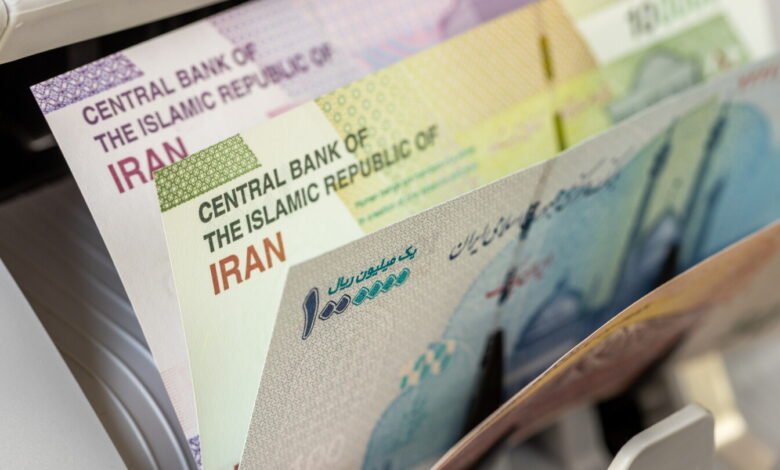
Iran is accelerating efforts to decentralise its banking system as expanding US sanctions, wartime economic pressures and growing financial instability force Tehran to reconsider how it manages increasingly scarce financial resources. The reforms include transferring greater lending authority to provincial banks, reducing commercial holdings across the banking sector and facing growing political challenges to the Central Bank of Iran’s control over monetary policy.
The restructuring comes amid Washington’s expanding economic pressure campaign, known as Operation Economic Outcast. On October 15, the US Treasury announced another round of sanctions targeting financial institutions accused of facilitating transactions on behalf of Iran, including Iraq’s International Development Bank, which Washington alleged had helped Bank Melli access US dollars after the closure of its Iraqi operations.
Although Iranian officials continue to insist that the economy remains resilient, the latest financial reforms reveal the extent of the pressure facing the Islamic Republic. Tehran is attempting to preserve liquidity, maintain access to credit and protect economic activity while managing the consequences of sanctions, war and longstanding weaknesses within its banking system.
Market and Financial Snapshot
| Key Development | Latest Position |
|---|---|
| US sanctions | Additional financial institutions targeted on October 15 |
| Banking decentralisation | At least 50% of deposits collected in each province directed towards lending within that province |
| Corporate divestment | Major banks instructed to reduce non-banking investments |
| Bank Melli | Announced plans to sell major corporate holdings |
| Bank Tejarat | Included in renewed corporate asset disposal plans |
| Bank Dey | Announced plans to sell corporate holdings |
| Monetary policy | Increasing parliamentary and institutional scrutiny of the Central Bank |
| Main economic risks | Inflation, currency depreciation, non-performing loans and restricted foreign currency access |
US Sanctions Intensify Pressure on Iran’s Financial System
The latest American sanctions represent another attempt to restrict Iran’s access to international financial channels and disrupt institutions accused of facilitating transactions for the Islamic Republic.
The designation of Iraq’s International Development Bank is particularly significant because it highlights the vulnerability of financial intermediaries operating outside Iran that are suspected of helping sanctioned institutions access foreign currency.
Iran’s banking sector was already facing substantial structural problems before the latest escalation in economic pressure. Political interference, corruption, distressed assets and the accumulation of non-performing loans have weakened the ability of financial institutions to operate as conventional lenders.
The ongoing conflict and restrictions on international financial access have further complicated the situation.
Despite these pressures, Central Bank of Iran Governor Abdolnaser Hemmati has publicly rejected suggestions that the economy is approaching collapse, arguing that the country has demonstrated resilience in the face of American economic restrictions.
However, the policy changes now being pursued suggest that Iranian authorities recognise the need to reorganise financial operations to maintain economic activity and support wartime requirements.
Iran Decentralises Banking as Provincial Lending Powers Expand
One of the most significant reforms involves transferring greater financial authority from central institutions to provincial banking operations.
The Central Bank of Iran has instructed large regime-owned banks to allocate at least 50% of deposits collected in each province towards lending within that same province.
The directive also encourages provincial branches to exercise greater authority over lending decisions, taking into consideration local financing requirements and inflationary conditions.
Separately, President Masoud Pezeshkian’s administration has announced plans for a provincial revenue-and-expenditure system that could give local authorities greater discretion over public spending priorities and locally generated revenues.
The objective is to make financial resources more accessible to local businesses and infrastructure projects while reducing administrative delays.
For Iran’s wartime economy, decentralisation could provide several advantages:
- Faster access to credit for local businesses.
- Greater flexibility in responding to regional economic disruption.
- Improved liquidity for provincial infrastructure and commercial activity.
- Reduced dependence on centralised financial decision-making.
- Additional flexibility in accessing foreign currency through alternative channels.
There is also a political dimension. By transferring greater responsibility to provincial authorities, Tehran can shift some accountability for economic performance away from central government institutions.
However, the policy carries considerable financial risks. Provincial lending decisions could become increasingly influenced by political considerations, potentially directing credit towards struggling businesses with limited repayment prospects.
This could increase non-performing loans and further weaken banks already affected by distressed assets.
Restricting the geographical allocation of deposits may also prevent financial resources from reaching the regions and industries where they are most urgently required.
Iranian Banks Move to Sell Corporate Holdings
A second major element of the restructuring involves reducing the ownership of commercial businesses by Iranian banks.
For decades, major financial institutions have accumulated substantial holdings in industrial companies, property and other non-banking enterprises. Some investments were acquired through commercial strategies, while others resulted from banks taking control of distressed companies after borrowers failed to repay their debts.
These holdings have tied up capital that could otherwise support conventional lending and exposed banks to additional commercial risks.
Iranian legislation has required banks to dispose of surplus assets and certain non-banking investments since 2015, although implementation has been inconsistent.
Recent government initiatives have renewed pressure to accelerate the process.
Economy Minister Ali Madanizadeh has outlined plans to identify and dispose of non-banking investments, with proceeds redirected towards strategically important economic projects. Central Bank regulators have also warned that institutions delaying the divestment process could face punitive measures.
Several major banks have announced plans to sell corporate holdings through auctions or the Tehran Stock Exchange, including Bank Melli, Bank Tejarat and Bank Dey.
However, completing these transactions is proving difficult.
Bank Melli’s proposed sale of its stake in a pharmaceutical company was halted following regulatory intervention and concerns about the valuation. Other institutions have struggled to attract private buyers or encountered questions surrounding transparency and asset pricing.
Even where sales are completed, instalment-based payments could delay the conversion of corporate assets into immediately available liquidity.
There is also a significant contradiction in the government’s strategy. If banks cannot dispose of their corporate holdings, the Central Bank or other state-controlled institutions may ultimately have to absorb these assets.
The Central Bank has already established a new body to absorb and liquidate excess bank assets if required.
This could simply transfer financial liabilities between government-controlled institutions rather than generate genuine new capital or improve the banking sector’s underlying financial health.
Political Pressure on Iran’s Central Bank Increases
A third development involves growing challenges to the authority of the Central Bank of Iran.
Parliamentarians have called for stronger legislative involvement in foreign-exchange policy, while proposals have emerged to give the parliamentary Planning and Budget Commission a greater role in monetary policy coordination and oversight of Central Bank personnel.
Other institutions, including the Supreme Audit Court and the General Inspection Organization, have also increased scrutiny of Central Bank decisions.
The Supreme Audit Court has raised concerns about the monitoring of export earnings held through foreign financial intermediaries and called for more comprehensive judicial review.
Meanwhile, the General Inspection Organization has demanded greater oversight of foreign-currency allocation and the prioritisation of essential imports.
These developments reflect growing dissatisfaction with the Central Bank’s ability to contain the depreciation of the rial and persistent inflation.
As foreign currency becomes increasingly scarce, competing political institutions are seeking greater influence over how the remaining resources are distributed.
Although no formal transfer of statutory monetary authority has yet taken place, the Central Bank’s operational independence could weaken as political and regulatory pressure increases.
Greater oversight could improve accountability, particularly when managing scarce foreign-exchange reserves. However, involving additional political actors in monetary decisions could also create competing priorities and slow the allocation of essential resources.
For an economy operating under wartime conditions, this could become a significant vulnerability.
Bullish Sentiment: Potential Benefits of Financial Decentralisation
- Greater provincial lending flexibility: Local banks could respond more quickly to regional business and infrastructure requirements.
- Improved access to liquidity: Decentralised lending could help maintain economic activity in provinces facing wartime disruption.
- Corporate asset disposals: Successful sales could release capital currently tied up in non-banking investments.
- Improved financial accountability: Greater institutional oversight could expose weaknesses in foreign-exchange allocation and banking operations.
- Alternative currency channels: Provincial financial autonomy could provide additional flexibility in managing international financial restrictions.
Bearish Sentiment: Structural Banking Risks Intensify
- US sanctions expansion: Additional restrictions could further limit Iran’s access to international financial intermediaries and foreign currency.
- Non-performing loans: Greater provincial lending discretion could increase politically motivated lending and repayment risks.
- Banking fragmentation: Regional allocation requirements could weaken the efficient distribution of capital across the economy.
- Corporate divestment difficulties: Limited private-sector demand and valuation disputes could prevent banks from converting assets into usable liquidity.
- Central Bank independence: Growing political interference could complicate monetary policy and foreign-exchange management.
- Inflationary pressure: Emergency borrowing and additional liquidity requirements could undermine efforts to control monetary growth.
- Currency depreciation: Persistent foreign-currency shortages could intensify pressure on the rial.
Implications for Washington: Sanctions Pressure Reshapes Iran’s Financial Strategy
Iran’s banking reforms demonstrate that American sanctions are influencing the way Tehran manages its financial system, even if they have not brought the Islamic Republic to the brink of economic collapse.
The decentralisation of provincial lending, disposal of corporate holdings and growing scrutiny of monetary policy are all attempts to preserve financial flexibility under increasingly difficult conditions.
For Washington, these developments create both opportunities and complications.
Restricting international financial intermediaries could make it harder for Iran to access foreign currency and conduct transactions through overseas institutions. However, decentralised financial arrangements and alternative channels could also make monitoring and enforcement more complicated.
The effectiveness of the sanctions campaign will therefore depend not only on targeting major Iranian institutions but also on identifying the wider network of financial intermediaries that facilitate transactions.
At the same time, Iran’s domestic reforms could create additional vulnerabilities. If provincial lending increases distressed assets, corporate divestment fails to generate liquidity and political interference weakens the Central Bank, the country’s financial system could become less coordinated and increasingly difficult to manage.
Economic Outlook: Iran Faces a Difficult Banking Restructuring
Iran’s financial restructuring represents an attempt to adapt to a prolonged period of sanctions, geopolitical confrontation and wartime economic pressure.
The immediate objective is to maintain lending, improve access to liquidity and ensure that increasingly scarce financial resources continue to support domestic economic activity.
However, the reforms contain significant contradictions.
Decentralisation may improve local flexibility but risks fragmenting financial oversight. Selling corporate holdings could release capital, but unsuccessful transactions may simply transfer liabilities between state-controlled institutions. Greater political supervision may improve accountability while simultaneously undermining the Central Bank’s ability to coordinate monetary policy.
The most important indicators to watch will be the rial’s performance, inflation, banking liquidity, non-performing loans and the ability of major institutions to complete corporate asset disposals.
For Washington, the challenge will be maintaining pressure on Iran’s international financial connections while monitoring the alternative structures Tehran develops to sustain its economy.
The central question is whether Iran’s banking reforms will create genuine financial resilience or simply redistribute existing weaknesses across a more decentralised system.
For now, the risk is that the restructuring intended to protect Iran from external economic pressure could ultimately expose deeper structural weaknesses within its banking sector.
Today Markets Analysis
Geopolitical, financial and economic intelligence by Today Markets IQ, powered by Octalas Market Intelligence.
Disclaimer: This article is provided for informational and educational purposes only. It does not constitute investment advice or a recommendation to buy or sell any financial instrument.