S&P 500 — US Large Cap Index
 FTSE 100 — UK Blue Chips
 Euro Stoxx 50 — Eurozone Leaders
 DAX 40 — German Equities
 CAC 40 — French Market Index
 Nikkei 225 — Japan Benchmark
 Hang Seng — Hong Kong Index
 Shanghai Composite — China Mainland
 ASX 200 — Australian Market
 TSX Composite — Canada Index
 Nifty 50 — India Large Cap
 STI Index — Singapore Market
 KOSPI — South Korea Index
 Bovespa — Brazil Equities
 JSE Top 40 — South Africa Index
 IPC Index — Mexico Market

Russia’s War Against Europe Escalates Beyond Hybrid Attacks as NATO Faces Growing Security Threat

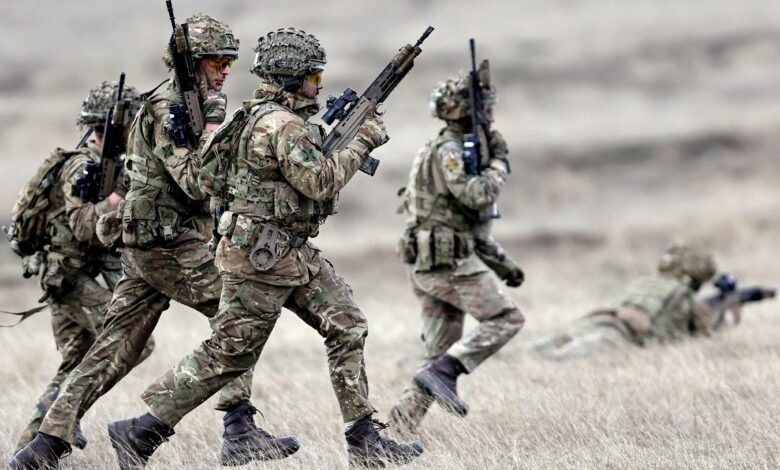
Europe is facing an increasingly direct and sustained security confrontation with Russia, with sabotage, infrastructure threats, aerial incursions and political interference exposing vulnerabilities far beyond Ukraine’s borders. Discussions at the Warsaw Security Forum highlighted a growing concern among European security officials and policymakers: Moscow’s campaign against Europe can no longer be viewed simply as hybrid warfare, but as an ongoing conflict designed to weaken NATO, undermine European unity and test the continent’s willingness to respond.
With Russia’s full-scale invasion of Ukraine approaching its sixth year, the security environment is becoming increasingly complex. Central and Eastern European countries are demonstrating stronger defence preparedness and societal resilience, while parts of Western and Southern Europe remain divided over the scale of the Russian threat.
The central message emerging from Warsaw was that Europe must move beyond recognising the danger and begin building a more coordinated, independent and credible security response.
Russia’s Campaign Against Europe Extends Beyond Ukraine
Russia’s actions increasingly extend beyond the battlefield in Ukraine, with European countries facing a sustained pattern of intimidation, sabotage, aerial incursions and other forms of hostile activity.
The distinction between conventional warfare and hybrid operations is becoming less meaningful as these activities increasingly affect the security of EU and NATO member states.
A key concern raised at the Warsaw Security Forum was that Russia deliberately operates below the threshold that would trigger NATO’s collective defence provisions under Article 5. However, the fact that individual incidents may not meet that threshold does not make them strategically insignificant.
The potential consequences include disruption to critical infrastructure, economic damage, political instability and loss of life.
The geographical scope of the threat is also changing. Security concerns are no longer confined to NATO’s eastern frontier. Potential flashpoints could emerge much further west, including major German cities and strategically important maritime routes such as the Øresund Strait between Denmark and Sweden.
Eastern Europe Emerges as Europe’s Security Frontline
Central and Eastern European countries continue to demonstrate a stronger awareness of Russia’s strategic intentions, reflecting their historical experience and geographical proximity to Moscow.
Countries closest to Russia have increasingly prioritised defence expenditure, military preparedness and societal resilience. Their approach contrasts with parts of Western and Southern Europe, where political divisions and differing perceptions of the Kremlin’s intentions continue to complicate a unified response.
Former Estonian President Toomas Hendrik Ilves highlighted this geographical divide, arguing that Russian influence and political support for pro-Russian movements become more apparent further west.
The underlying concern is that Europe’s security strategy remains uneven. Countries most exposed to Russian pressure are often the strongest advocates of greater preparedness, while other members of the alliance have yet to adopt the same level of urgency.
European Political Unity Faces a Critical Test in 2027
The coming year could prove particularly important for European security and political cohesion.
France’s presidential election and a series of German state elections, including in North Rhine-Westphalia, are expected to test the resilience of European political institutions at a time of heightened geopolitical uncertainty.
Concerns have been raised about Russian efforts to support political movements and amplify divisions within European democracies. The Alternative for Germany (AfD) and France’s National Rally were specifically highlighted in discussions surrounding Moscow’s political influence, alongside concerns about the amplification of political extremes.
These developments could complicate European decision-making on sanctions, defence spending and continued military and financial support for Ukraine.
The Warsaw discussions also exposed concerns about the future direction of transatlantic relations. Speakers criticised the uncertainty surrounding US policy towards Russia, arguing that Europe cannot assume Washington will always provide the same level of strategic leadership.
This has strengthened calls for a more capable European pillar within NATO, with greater responsibility for defence planning, military production and regional security.
Sanctions and Frozen Russian Assets Remain Key Pressure Points
European policymakers face growing pressure to strengthen economic measures against Moscow.
Proposals discussed at Warsaw included expanding sanctions against Vladimir Putin’s inner circle, Russian financial institutions and other entities supporting the Kremlin’s war effort.
The potential use of frozen Russian central bank assets to finance Ukraine’s recovery and defence also remains a contentious issue.
Belgium is particularly important to this debate because a substantial share of Russia’s immobilised central bank assets is held within its jurisdiction. Differences among EU member states continue to complicate agreement over how these funds could be used.
The debate reflects a wider question about Europe’s willingness to move from economic pressure towards more decisive measures designed to increase the cost of Russia’s continued aggression.
Russia’s Growing Dependence on China Raises Strategic Concerns
Another important issue discussed in Warsaw was Russia’s increasing dependence on China.
Although the Russian economy has demonstrated considerable resilience under sanctions, its transition towards a war-based economic structure has created longer-term vulnerabilities.
Russia has redirected significant resources towards military production and maintained economic activity despite restrictions imposed by Western governments. However, this apparent stability may conceal underlying weaknesses, including reduced economic flexibility and growing dependence on external partners.
The argument advanced by Russian opposition figure Vladimir Kara-Murza was that Moscow’s relationship with Beijing increasingly resembles that of a subordinate partner rather than an equal strategic power.
This growing dependence could have implications for Russia’s long-term geopolitical position, particularly if its economic and industrial relationships with China become increasingly difficult to reverse.
The Warsaw discussions also raised the importance of preparing for a possible post-Putin Russia, even if such a transition remains uncertain and potentially distant.
Europe’s Defence Industry and Strategic Independence
Europe has made significant progress in strengthening its security architecture since Russia launched its full-scale invasion of Ukraine.
Germany’s rearmament, increased defence expenditure across the continent and the accession of Finland and Sweden to NATO represent major developments in European security.
However, significant challenges remain.
Europe continues to depend on external powers for important defence capabilities, industrial supply chains and strategic resources. The ability to produce sufficient military equipment, maintain secure supply networks and coordinate procurement remains essential to reducing these vulnerabilities.
The concept of a stronger European NATO is therefore gaining importance. European countries are being encouraged to assume a greater share of the defence burden while retaining the collective protection provided by the transatlantic alliance.
This would require more than increased military budgets. It would also demand stronger industrial capacity, coordinated procurement, technological investment and a clearer common security strategy.
Bullish Sentiment: Europe’s Defence and Strategic Position
- Rising defence expenditure: European governments are increasing military spending and prioritising national security.
- Stronger Eastern European preparedness: Frontline states are demonstrating greater societal resilience and awareness of Russian threats.
- NATO expansion: Finland and Sweden’s accession has strengthened the alliance’s northern security position.
- German rearmament: Germany’s increased defence commitments represent a significant shift in European security policy.
- Greater strategic independence: Growing recognition of Europe’s need to strengthen its own defence capabilities could accelerate investment in military production and technology.
- Continued support for Ukraine: European countries retain the capacity to provide substantial military, financial and political assistance.
Bearish Sentiment: Political Divisions and Security Vulnerabilities
- Uneven threat perception: European countries remain divided over the urgency and scale of the Russian threat.
- Political interference: Concerns about Russian influence and support for political extremes could weaken European unity.
- Uncertain US commitment: Changes in Washington’s foreign policy could create additional pressure on European security arrangements.
- Defence industrial limitations: Europe still faces challenges in developing independent production capacity and secure supply chains.
- Sanctions disagreements: Disputes over frozen Russian assets and additional sanctions continue to complicate collective action.
- Economic vulnerabilities: Russia’s war-based economy and growing relationship with China create a complex long-term geopolitical challenge.
Geopolitical Outlook: What Europe Must Prepare For
The Warsaw Security Forum highlighted a fundamental shift in Europe’s security environment. Russia’s campaign is no longer confined to military operations in Ukraine, with hostile activity increasingly testing the resilience of European institutions and NATO member states.
The most immediate challenge is maintaining political unity while strengthening the continent’s ability to respond to threats that fall below the traditional threshold of conventional warfare.
The year ahead will be particularly important, with elections in major European countries potentially influencing defence policy, sanctions and support for Ukraine.
Europe must also address its dependence on external military capabilities and industrial supply chains. Greater defence spending will only translate into stronger security if it is accompanied by investment in production, technology, logistics and coordinated military planning.
The strategic question is no longer whether Europe faces a sustained confrontation with Russia, but whether its political leadership can respond with sufficient unity and determination.
Market and Investment Implications
The changing European security environment carries important implications for financial markets and investment sectors.
- Defence and aerospace: Increased military expenditure could support long-term demand for defence equipment, technology and military infrastructure.
- Energy markets: Continued geopolitical tensions and sanctions could influence European energy security, supply routes and commodity pricing.
- Industrial production: Greater emphasis on strategic independence could accelerate investment in manufacturing, critical materials and defence supply chains.
- Cybersecurity: Persistent sabotage and digital threats could increase demand for cybersecurity infrastructure and specialist services.
- European currencies and bonds: Changes in geopolitical risk, government borrowing requirements and defence spending could influence investor confidence, sovereign financing conditions and currency markets.
These implications will depend on the scale of future government commitments, the evolution of the conflict and the ability of European economies to finance and deliver their security objectives.
Market Outlook for the Coming Sessions
Europe enters the next phase of its confrontation with Russia facing a combination of military, political and economic challenges. Defence investment is increasing, NATO has expanded its northern presence and frontline states are pushing for a more decisive continental response.
However, political fragmentation, uncertainty surrounding US policy and disagreements over sanctions continue to limit Europe’s ability to act as a fully coordinated strategic power.
The central message from Warsaw is that Europe can no longer treat Russian aggression as a distant security problem or a collection of isolated hybrid incidents.
Its response will require sustained investment, stronger political coordination and a willingness to assume greater responsibility for its own security.
Europe’s strategic resilience will increasingly depend on whether it can translate growing awareness of the Russian threat into credible collective strength.
Today Markets Analysis
Geopolitical risk and global market intelligence by Today Markets IQ, powered by Octalas Market Intelligence.
Disclaimer: This article is provided for informational and educational purposes only. It does not constitute investment advice or a recommendation to buy or sell any financial instrument.